Thanksgiving was great--the folks came to my house, and were satisfied. Vegetarians and meat-eaters alike got along, as all the sides were veg-friendly (the gravy was made with vegetarian bouillon, etc.), and everyone loved the green bean casserole, a recipe which was adapted from the Silk soymilk website. (My change was to fry some shallots separately, and mix half of them in the casserole, and put the other half on top.) To me, however, one of the best things about the whole week of Thanksgiving is having sweet potato pie for breakfast, the best breakfast in the world!
I should have known--they want me to host Christmas, too! Actually, that sounds wonderful, as Thanksgiving went without a hitch because I started planning in October, around Halloween, decorating, and all that good stuff.
I like to decorate au naturel, in part because of principle, but also because it's cheap. I mean, why pay for faux leaves when you can, literally, pick them up off the ground? That's what I do--I walk through the neighborhood, and look for dropped pine cones, and for the tree that's dropped small branches of needles, to use indoors as short garlands. Actually, as long as they're still green while on the ground, the pine branches will look fresh for weeks indoors and, of course, dry pine cones are usable forever. (So, again, why do people buy fake ones?)
However, the tricky plant, at least in terms of trying to keep it fresh when cut, is the holly. Fortunately, I have a decent sized holly right outside, with large, glossy leaves, and its brimming with berries, so I decided to test how to best keep them fresh when cut. Last week, I cut quite a few from this tree/bush, and kept half in a plastic bag; the other ones I applied oil to, in an effort to help them keep moisture, in order to keep them fresh longer. Well, last night I peeked in the plastic bag for the first time in almost a week, and those holly branches look fresher than the ones that I babied with all the oil! [Another year, I tried Future floor polish as a holly preservative, which worked for a couple of weeks, but made a mess in the house, as you can imagine, when it began to dry in the bowl in which I dipped the plants. ]
Let's not even discuss those lovely tiny stone pine and rosemary plants available at Whole Foods for the holidays, as they tempt me to take them home, and promptly kill them with my black thumb! (However, I have found that rosemary branches do quite well when kept submerged in water, whether on the table or in the refrigerator. Just change the water every few days...whether they retain enough flavor to use for potato dishes is another matter, though.)
* * *
This may be the time of year to consider when, and how, to give gifts to colleagues and other business associates. Of course, sites offering gift ideas are a dollar a dozen, but there are also websites with guidelines on appropriate corporate gift-giving (and not just from American Express), knowledge which makes the holidays less stressful already!
Wednesday, November 29, 2006

Friday, October 27, 2006
Oh, go jump in the lake...
Do you get the sinking feeling that chemicals that have affected critters' reproductive systems are starting to affect animal behavior as well?
I mean, when otters attack (as there have been two that I've heard of this year, including one involving a pregnant woman in Roanoke), deer jump into the Tidal Basin, and a man is critically injured by a (normally docile) sting ray, something's rotten in Denmark. Now, the case of the deer may be different, as another sad situation may be causing their flights into futility--huntin' season. That's right, it's been demonstrated that deer-automobile collisions (like the one that took place the other morning in Virginia) increase dramatically during deer hunting season, which is also the time of year they are most likely to be reckless, being also mating season and all. The Tidal Basin rescuers showed stamina and bravery in rustling the frightened critters out of the basin, considering the unusual nature of the situation. Before this week, I was unaware, like most folks, of the deer's desire to perform aquatic ballet!
Unfortunately, with the end of daylight savings time coming tomorrow, I'm more afraid than ever of hitting one of these walking (and leaping!) studies in grace.
* * *
Perhaps I should save my worries for driving the Beltway (which I studiously avoid anyway), as this past weekend youngsters threw rocks and bricks onto vehicles. Miraculously and thankfully, no one was seriously injured. Whatever possesses people to commit such simultaneously stupid and cruel acts? (Especially after someone was seriously injured only a couple of years ago in Virginia by just such behavior.) Considering that this happened on a part of the road near the construction for the National Harbor project in Oxon Hill, it's a wonder that even more confusion didn't ensure, as the general area, as you can imagine, is a maze of turns, with traffic lights placed in new locations, and a new exit to the Wilson Bridge being built there, too, the rock-throwing idiots are fortunate that they didn't get run over getting to the construction site to find objects to lob at people's vehicles.
***
One thing that puzzles me about planning for the harbor is whether anyone has openly considered what effect this hubbub will have on historic Oxon Hill Manor, which is right next door, so to speak, to this glitzy megapolis-to-be. When the manor's renovation is completed, will people want to pay the county to have weddings and other events there, now that the peace and quiet that used to be there(although it was never far from Route 210), will be gone? Considering that the area near the manor is primarily residential, single-family homes in the immediate area, what impact will Vegas east have on traffic on the adjoining streets? (I can't properly consider Livingston Road a side street, but still...) Have there been plans to upgrade public transportation in the area, as buses only run morning and evening weekdays in that area? I don't recall a politician bringing up the subject, which is odd considering the exponential increase in congestion that the project is likely to scare up.
I better get a few more good looks at the area before it's developed to a point that I won't recognize it, which won't be too long.
I mean, when otters attack (as there have been two that I've heard of this year, including one involving a pregnant woman in Roanoke), deer jump into the Tidal Basin, and a man is critically injured by a (normally docile) sting ray, something's rotten in Denmark. Now, the case of the deer may be different, as another sad situation may be causing their flights into futility--huntin' season. That's right, it's been demonstrated that deer-automobile collisions (like the one that took place the other morning in Virginia) increase dramatically during deer hunting season, which is also the time of year they are most likely to be reckless, being also mating season and all. The Tidal Basin rescuers showed stamina and bravery in rustling the frightened critters out of the basin, considering the unusual nature of the situation. Before this week, I was unaware, like most folks, of the deer's desire to perform aquatic ballet!
Unfortunately, with the end of daylight savings time coming tomorrow, I'm more afraid than ever of hitting one of these walking (and leaping!) studies in grace.
* * *
Perhaps I should save my worries for driving the Beltway (which I studiously avoid anyway), as this past weekend youngsters threw rocks and bricks onto vehicles. Miraculously and thankfully, no one was seriously injured. Whatever possesses people to commit such simultaneously stupid and cruel acts? (Especially after someone was seriously injured only a couple of years ago in Virginia by just such behavior.) Considering that this happened on a part of the road near the construction for the National Harbor project in Oxon Hill, it's a wonder that even more confusion didn't ensure, as the general area, as you can imagine, is a maze of turns, with traffic lights placed in new locations, and a new exit to the Wilson Bridge being built there, too, the rock-throwing idiots are fortunate that they didn't get run over getting to the construction site to find objects to lob at people's vehicles.
***
One thing that puzzles me about planning for the harbor is whether anyone has openly considered what effect this hubbub will have on historic Oxon Hill Manor, which is right next door, so to speak, to this glitzy megapolis-to-be. When the manor's renovation is completed, will people want to pay the county to have weddings and other events there, now that the peace and quiet that used to be there(although it was never far from Route 210), will be gone? Considering that the area near the manor is primarily residential, single-family homes in the immediate area, what impact will Vegas east have on traffic on the adjoining streets? (I can't properly consider Livingston Road a side street, but still...) Have there been plans to upgrade public transportation in the area, as buses only run morning and evening weekdays in that area? I don't recall a politician bringing up the subject, which is odd considering the exponential increase in congestion that the project is likely to scare up.
I better get a few more good looks at the area before it's developed to a point that I won't recognize it, which won't be too long.
Tuesday, October 10, 2006
Not for Kids Only, Part II, or, the Mo' Money Edition
I'm pleased with myself, finally taking to heart Suze Orman's advice not to spend the change, but save it. The practical difficulty, until recently, has been in finding a good place to park the coins.
A small "toy" (well, that's how it's marketed, unfortunately), to the rescue--the Money Savvy Pig. I got one as a giveaway, at the Wachovia booth at a convention, and I've been using it ever since. A modern-day incarnation of the old faithful savings device, this piggy is translucent, and available in a number of colors to boot. Most important, instead of the one drop-in slot for the loot, there are four slots, as well as four piggy feet that you use to empty the plastic porker, each slot corresponding to a foot, which you open to empty that particular chamber.
Although the four chambers are labeled "save," "donate," "spend," and "invest," I use the compartments my own way, of course, and ignore the labels. Instead, I designated each slot for a particular coin denomination--the first for pennies, the second, nickels, etc. That way, as each compartment fills up, I can open its foot, and slide its coins into a roll or rolls, which will prove a big timesaver over having the coins mixed, which meant having to separate them into separate stacks for rolls.
The pig is available at http://www.toysrus.com/, of course, as well as other Internet sites, for about $15. It's the creation of a company called Money Savvy Generation, a corporation started by a mother wishing to teach her children about money and saving. (It markets another product called 'Cash Cow.')
As great as I think the product is, I think it's a mistake to limit the marketing primarily to the schoolyard set, as people of all ages need help learning how to save, and all the practical encouragement that they can get, if the recent statistics on the dismal American savings rate are any indication.
* * *
Mo' Money, Mo' Money...
A website that generally dedicates itself to the time management principles of GTD ("getting things done") has recently focused on sites that deal with money management--the other side of the coin to time management, so to speak. 43 Folders' emphasis on all things monetary had various strategies for keeping (and even earning) more money. What a concept!
I agree with many of the sentiments in the Free Money Finance article, The Fastest Way to Get Out of Debt, because it works! (I've used the same principles in the past to pay off debt.) I would add that to take full advantage of the timing of your income, particularly to pay off the largest debts (or to make a large purchase in cash), it's best to take a calendar to map out a year at a time, circle every payday, and note the months in which you have more than two paydays. Depending on the day of the week you are paid, the number of months in which you have more than two paydays works out to two to four months of the year! Combine this knowledge with snowballing the payoff of debts, as Dave Ramsey recommends [which, I can say from experience works, and which I did before I even heard of Mr. Ramsey], and you will see great progress in debt reduction in a year's time.
* * *
The most practical book I've read (and, more importantly, purchased) on personal finance is All Your Worth, co-authored by Elizabeth Warren and her daughter Amelia Warren Tyagi, because the ladies tell you which financial moves you should make, and, crucially, in which order you should make them--should you pay off your debts first, or save for retirement first? (Or at the same time?) Warren the Elder and the Younger tell you how, why, and even give permission to have a little fun money! (Thankfully, the book is a no-scold zone.)
Elizabeth Warren, who used to be a Republican until she started research on the reasons that people declare bankruptcy, currently writes a column, Warren Reports on the Middle Class for the blog TPM Cafe, concentrating on financial issues that affect the average person, particularly on how companies are trying to wheedle more money from our pockets. A must-read.
* * *
Granted, this topic does not affect me, as I use a prepaid cell phone (don't blab enough to justify a bill of $40 a month, at a minimum), but bet'cha didn't know that you can ditch your cell phone contract without incurring the wrath of a termination fee! In fact, you don't even need to give up your phone number. Good news!
A small "toy" (well, that's how it's marketed, unfortunately), to the rescue--the Money Savvy Pig. I got one as a giveaway, at the Wachovia booth at a convention, and I've been using it ever since. A modern-day incarnation of the old faithful savings device, this piggy is translucent, and available in a number of colors to boot. Most important, instead of the one drop-in slot for the loot, there are four slots, as well as four piggy feet that you use to empty the plastic porker, each slot corresponding to a foot, which you open to empty that particular chamber.
Although the four chambers are labeled "save," "donate," "spend," and "invest," I use the compartments my own way, of course, and ignore the labels. Instead, I designated each slot for a particular coin denomination--the first for pennies, the second, nickels, etc. That way, as each compartment fills up, I can open its foot, and slide its coins into a roll or rolls, which will prove a big timesaver over having the coins mixed, which meant having to separate them into separate stacks for rolls.
The pig is available at http://www.toysrus.com/, of course, as well as other Internet sites, for about $15. It's the creation of a company called Money Savvy Generation, a corporation started by a mother wishing to teach her children about money and saving. (It markets another product called 'Cash Cow.')
As great as I think the product is, I think it's a mistake to limit the marketing primarily to the schoolyard set, as people of all ages need help learning how to save, and all the practical encouragement that they can get, if the recent statistics on the dismal American savings rate are any indication.
* * *
Mo' Money, Mo' Money...
A website that generally dedicates itself to the time management principles of GTD ("getting things done") has recently focused on sites that deal with money management--the other side of the coin to time management, so to speak. 43 Folders' emphasis on all things monetary had various strategies for keeping (and even earning) more money. What a concept!
I agree with many of the sentiments in the Free Money Finance article, The Fastest Way to Get Out of Debt, because it works! (I've used the same principles in the past to pay off debt.) I would add that to take full advantage of the timing of your income, particularly to pay off the largest debts (or to make a large purchase in cash), it's best to take a calendar to map out a year at a time, circle every payday, and note the months in which you have more than two paydays. Depending on the day of the week you are paid, the number of months in which you have more than two paydays works out to two to four months of the year! Combine this knowledge with snowballing the payoff of debts, as Dave Ramsey recommends [which, I can say from experience works, and which I did before I even heard of Mr. Ramsey], and you will see great progress in debt reduction in a year's time.
* * *
The most practical book I've read (and, more importantly, purchased) on personal finance is All Your Worth, co-authored by Elizabeth Warren and her daughter Amelia Warren Tyagi, because the ladies tell you which financial moves you should make, and, crucially, in which order you should make them--should you pay off your debts first, or save for retirement first? (Or at the same time?) Warren the Elder and the Younger tell you how, why, and even give permission to have a little fun money! (Thankfully, the book is a no-scold zone.)
Elizabeth Warren, who used to be a Republican until she started research on the reasons that people declare bankruptcy, currently writes a column, Warren Reports on the Middle Class for the blog TPM Cafe, concentrating on financial issues that affect the average person, particularly on how companies are trying to wheedle more money from our pockets. A must-read.
* * *
Granted, this topic does not affect me, as I use a prepaid cell phone (don't blab enough to justify a bill of $40 a month, at a minimum), but bet'cha didn't know that you can ditch your cell phone contract without incurring the wrath of a termination fee! In fact, you don't even need to give up your phone number. Good news!
Wednesday, September 20, 2006
Text Messaging for Grown Folk
OK, so text messaging won't help this little guy out... (is he on the payroll of the Farmer's Almanac, which is predicting mucho snow this year? Hmm...)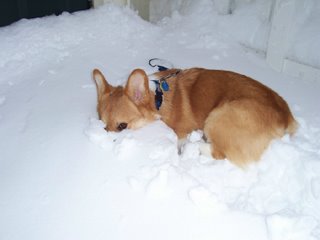

Text messaging has been in the news a lot as of late, especially the story about the teen in South Carolina who sent a distress call via text message from her kidnapper's cell phone, which proves that there are uses for text messaging that involve something other than passing e-notes in class.
Why should teens have all the fun? There are uses for text messaging that would benefit anyone, as the quick-witted South Carolina teen showed. One of them is a new (and free!) service from Google. A cell phone, any cell phone, can be used to access Google to obtain answers. Sweet! Best of all, it works--I used it a couple of time to get definitions, using Google's 'define' function. The only limitation might be your cell phone service's text message rates. I'm even getting faster at texting, although I won't be winning contests anytime soon.
Another grown-up use of text messaging, which you may have heard of, as it has received much recent publicity a few weeks ago, is the website www.ohdontforget.com, which is a text messenging reminder service. You type your cell phone number, desired date and time, and the message at the website, and at the date/time you specified, a text message reminder will appear on your cell phone. Nice! It's also free, although the program's creator accepts donations.
It's nice to hear good news from the computer world for a change, as so much of it consists of news about the latest virus or Trojan horse or other nefarious plot to make your system take a dive.
Monday, September 18, 2006
Apres le deluge
After leaving work one evening, I headed toward the subway parking garage with fear, trepidation, and self-loathing for putting off a minor purchase.
The day's events, however, impeled me to wait no longer. An impending storm was the impetus for me to finally creep toward my local Radio Shack (yes, the friendly chain with the high-tech employee firing methods), with sheets of rain pounding, to inquire about Grundig radios, the shortwave ones that come with hand cranks as an alternative energy source.
Well, dropping by le shack turned out to be a good thing, as there were, count 'em, not one, not two, but three shiny specimens of the radio species, modern hand crank models.
While two of the three were the Radio Shack brand, I chose the third, most expensive model. (Mind you, it cost, with tax, just over $50, so the hit wasn't too hard.) The other two radios were a reasonable $29.99 each. The machine I purchased, the Eton FR-300, has the curious distinction of being licensed by the American Red Cross. (So, for every such radio purchased, 65 cents goes to the Red Cross.) The reason I chose that model over the other two was that it could also be used to charge a cell phone, and comes with various cell phone adapters for that purpose. Unfortunately, none of those fat-ended adapters fit the newest, sleek cell phone models.
In addition to cranking (which means the radio doubles as an exercise machine!), the device can also be powered by batteries, and comes with three rechargeable ones, although it can run without any batteries, as well, thanks to the crank.
The radio also has a nice strap on top, for easy carrying without a case, but also comes with a strappy black bag that resembles a canvas purse. Nice touch, particularly if you need to carry it out of the house in an emergency...
Anyway, I followed the easy operating instructions and got clear FM reception (eureka!), as well as reception on some of its TV stations. One of the tuning options, unsurprisingly, is a frequency dedicated to the weather.
I cranked the contraption for a minute or so before turning it on; those measly two minutes of arm power made me feel more muscular, and the thing ran for about 15 minutes. As the manual says, playing time is affected by volume as well as the length of time (and rapidity!) of cranking.
A few of the radio's controls, while useful in emergencies, nonetheless give me the willies. (I suppose the possibility of ever needing such equipment is what frightens me.) The 'alert' button is on the left side of one knob, and on the right is the 'siren,' which sandwich the 'off' portion of the knob. Another button has , on its left, 'light,' and on its right, 'flash.' Uh oh...
The sales clerks were as surprised as I to see that there were still such products still on the shelves. I was especially taken aback because the storm was predicted to have the potential of this past June's storms, with all that local flooding.
Because none (that's right, none) of the cell phone adapters worked with my cell phone, my next emergency oriented purchase might be a dedicated cell phone hand crank charger. I thought I saw such an item while glancing through the window of a Verizon Wireless store. You never know...
salt peanuts, salt peanuts...
An unexpected find when picking up a couple of things at Shoppers Food--raw peanuts. Immature raw white (?green) peanuts, as these were, can only mean one thing--time to fix boiled peanuts, that Southern staple! Another woman, from Africa, was as excited as I to find them, and shared tips on preparing the delicacy (specifically, not to boil them for too long, only for an hour or less).
I first tasted the treats over a year ago, when a supervisor brought some to work, and it was instant addiction. Soon after, I asked local stores about them, but none carried them. I then trolled the Internet, which did bring some finds, but the shipping charges made me think twice (and three times).
To be a first-time peanut boiler, I didn't do too badly; the taste of the snacks improves marked, however, upon sitting overnight in the brine, and they can be microwaved so that they will be hot. The flavor is reminiscent of edamame, but the peanuts, even this relatively rare variety, are much cheaper.
Some time back, I stumbled across a study which ventured that boiled peanuts are considerably less allergenic than roasted goobers. Of course, more research needs to be done to verify whether this intriguing hypothesis has a basis in fact, but I'm waiting with baited breath to discover the facts on this debate.
A meditation on pizza--a defense of slow food
Now I realize why people swear by Ledo's Pizza (which I first tried a year ago, when one opened near me), and have their favored pizza emporiums, and know why there is such affection for pizza eaten on premise, regardless of the popularity of delivery pizza (which, I have come to find out, should be considered a different food altogether). Ledo's does not deliver, and while I first thought the stance was unreasonable, I understand it now.
I decided to order pizza from my personal fave, Washington Deli, which only does orders of three or more pies, as they are a small establishment--or so I was told. The pizzas came in a timely manner, and were tasty, with much better flavor than the national chains, but something was missing...
As good as the pizza was when delivered, it is that much better consumed at the deli, eaten at one of the outdoor tables, which catch a decent breeze...it's not just the atmosphere of a pizza place that's superior, but the pizza itself undergoes an unpleasant transformation as it's being delivered. To remain hot, and to keep from being damaged, of course the pizza must be contained. However, when a hot item such as pizza is enclosed for more than a couple of minutes, condensation develops, which toughens and sogs up even a thin crust, and renders it non-crispy. (Yuck!)
So, while pizza may be the original fast food, if I need food delivered, I think I'll stick to Chinese!
The day's events, however, impeled me to wait no longer. An impending storm was the impetus for me to finally creep toward my local Radio Shack (yes, the friendly chain with the high-tech employee firing methods), with sheets of rain pounding, to inquire about Grundig radios, the shortwave ones that come with hand cranks as an alternative energy source.
Well, dropping by le shack turned out to be a good thing, as there were, count 'em, not one, not two, but three shiny specimens of the radio species, modern hand crank models.
While two of the three were the Radio Shack brand, I chose the third, most expensive model. (Mind you, it cost, with tax, just over $50, so the hit wasn't too hard.) The other two radios were a reasonable $29.99 each. The machine I purchased, the Eton FR-300, has the curious distinction of being licensed by the American Red Cross. (So, for every such radio purchased, 65 cents goes to the Red Cross.) The reason I chose that model over the other two was that it could also be used to charge a cell phone, and comes with various cell phone adapters for that purpose. Unfortunately, none of those fat-ended adapters fit the newest, sleek cell phone models.
In addition to cranking (which means the radio doubles as an exercise machine!), the device can also be powered by batteries, and comes with three rechargeable ones, although it can run without any batteries, as well, thanks to the crank.
The radio also has a nice strap on top, for easy carrying without a case, but also comes with a strappy black bag that resembles a canvas purse. Nice touch, particularly if you need to carry it out of the house in an emergency...
Anyway, I followed the easy operating instructions and got clear FM reception (eureka!), as well as reception on some of its TV stations. One of the tuning options, unsurprisingly, is a frequency dedicated to the weather.
I cranked the contraption for a minute or so before turning it on; those measly two minutes of arm power made me feel more muscular, and the thing ran for about 15 minutes. As the manual says, playing time is affected by volume as well as the length of time (and rapidity!) of cranking.
A few of the radio's controls, while useful in emergencies, nonetheless give me the willies. (I suppose the possibility of ever needing such equipment is what frightens me.) The 'alert' button is on the left side of one knob, and on the right is the 'siren,' which sandwich the 'off' portion of the knob. Another button has , on its left, 'light,' and on its right, 'flash.' Uh oh...
The sales clerks were as surprised as I to see that there were still such products still on the shelves. I was especially taken aback because the storm was predicted to have the potential of this past June's storms, with all that local flooding.
Because none (that's right, none) of the cell phone adapters worked with my cell phone, my next emergency oriented purchase might be a dedicated cell phone hand crank charger. I thought I saw such an item while glancing through the window of a Verizon Wireless store. You never know...
salt peanuts, salt peanuts...
An unexpected find when picking up a couple of things at Shoppers Food--raw peanuts. Immature raw white (?green) peanuts, as these were, can only mean one thing--time to fix boiled peanuts, that Southern staple! Another woman, from Africa, was as excited as I to find them, and shared tips on preparing the delicacy (specifically, not to boil them for too long, only for an hour or less).
I first tasted the treats over a year ago, when a supervisor brought some to work, and it was instant addiction. Soon after, I asked local stores about them, but none carried them. I then trolled the Internet, which did bring some finds, but the shipping charges made me think twice (and three times).
To be a first-time peanut boiler, I didn't do too badly; the taste of the snacks improves marked, however, upon sitting overnight in the brine, and they can be microwaved so that they will be hot. The flavor is reminiscent of edamame, but the peanuts, even this relatively rare variety, are much cheaper.
Some time back, I stumbled across a study which ventured that boiled peanuts are considerably less allergenic than roasted goobers. Of course, more research needs to be done to verify whether this intriguing hypothesis has a basis in fact, but I'm waiting with baited breath to discover the facts on this debate.
A meditation on pizza--a defense of slow food
Now I realize why people swear by Ledo's Pizza (which I first tried a year ago, when one opened near me), and have their favored pizza emporiums, and know why there is such affection for pizza eaten on premise, regardless of the popularity of delivery pizza (which, I have come to find out, should be considered a different food altogether). Ledo's does not deliver, and while I first thought the stance was unreasonable, I understand it now.
I decided to order pizza from my personal fave, Washington Deli, which only does orders of three or more pies, as they are a small establishment--or so I was told. The pizzas came in a timely manner, and were tasty, with much better flavor than the national chains, but something was missing...
As good as the pizza was when delivered, it is that much better consumed at the deli, eaten at one of the outdoor tables, which catch a decent breeze...it's not just the atmosphere of a pizza place that's superior, but the pizza itself undergoes an unpleasant transformation as it's being delivered. To remain hot, and to keep from being damaged, of course the pizza must be contained. However, when a hot item such as pizza is enclosed for more than a couple of minutes, condensation develops, which toughens and sogs up even a thin crust, and renders it non-crispy. (Yuck!)
So, while pizza may be the original fast food, if I need food delivered, I think I'll stick to Chinese!
Wednesday, August 23, 2006
Redux? (Or, will we ever learn?)
It's reassuring to discover that I'm not the only serial plant killer. A few former black thumbs even agreed to reveal themselves, and how they overcame their killer tendencies, in a recent Washington Post article on indoor care for your leafy green friends.
Granted, there are issues in container gardening that don't present themselves as intensely with regular outdoor gardening. This is the situation even with herbs, which are supposed to be hardy and easy to grow, indoors or out. As I found out the hard way, t'aint' necessarily so.
Foolishly, I once purchased a lush baby Mediterranean bay laurel (because the flavor of the California variety is disgusting) and set it on the deck, figuring that such a plant would be perfect for the hot weather, in that it wouldn't require water. Wrong! The leafy guy began to droop, yet I was afraid to water it, for fear of overwatering (although the plant was burning up in the summer sun). Quel horreur!
I later (much too later, however) asked knowledgeable gardening folk at the National Cathedral's greenhouse about the plant's fall from grace, and they told me that greenery in a pot needs to be watered lightly on a regular basis. When in the ground, the slow-growing beauty's roots are able to tap deep on resources in the soil, in search of water and nutrients. But in a container, people need to provide water for their plants. Oops!
* * *
True horror...hard on the heels of the first "anniversary" of Hurricane Katrina come a solemn pronouncement from Max Mayfield, director of the U.S. National Hurricane Center:
"I think the day is coming. I think eventually we're going to have a very powerful hurricane in a major metropolitan area worse than what we saw in Katrina and it's going to be a mega-disaster. With lots of lost lives...
"I don't know whether that's going to be this year or five years from now or a hundred years from now. But as long as we continue to develop the coastline like we are, we're setting up for a disaster."
Uh-oh, time to reconsider purchasing that cute bungalow by the beach. Seriously Mayfield is not the first to predict major coastal flooding (others have been saying that more frequent and serious coastal flooding is an effect of global warming), but he's a person whose prognostications should make us sit up and take note.
* * *
Last night, the second installment of Spike Lee's documentary, When the Levees Broke (Acts 3 and 4) aired on HBO. It focused almost as much on the rich cultural roots of New Orleans, such as the black Indians of Mardi Gras, Mardi Gras itself, and jazz funerals, as on Katrina's socio-political, psychological, and physical after-effects.
In fact, trumpeter Terence Blanchard held a one-man jazz funeral lamenting the almost-demise of his neighborhood. His mother Wilhemina, on breaking down upon seeing her home for the first time since the storm, said what epitomizes the entire post-Katrina situation, that rebuilding is "easier said than done." (The mountains of debris in the area made the "Not as Seen on TV" sign posted in the neighborhood a perfect, unfortunate fit.)
A full neighborhood jazz funeral was shown in Act 4, interspersed with commentary from a young man who spoke of coming back and getting lost in his own neighborhood, the devastation is still so extensive.
The Army Corps of Engineers is in charge of cleaning up the debris in New Orleans? Talk about the fox guarding the henhouse--the agency that didn't build a levee that would protect the city is now in charge of that city's cleanup--no wonder the rebuilding process has been so slow!
* * *
Perhaps the best anti-Republican screed this year is Alan Wolfe's recent article in the Washington Monthly (a publication which is one of the best political magazines around), "Why Conservatives Can't Govern," an in-depth examination of conservative governing philosophy, which explains, in great part, the Bush administration's general incompetence (FEMA, the war in Iraq, the budget deficit, losing ground in Afghanistan, ad nauseum.)
* * *
A disaster of a completely unnatural kind is scoped in Malcolm Gladwell's eye-catching article in The New Yorker, "The Risk Pool," which delves into labor history to show how General Motors and other companies got into the pension mess that they're in, and what this means for America.
To wit:
"Under the circumstances, one of the greatest mysteries of contemporary American politics is why Wagoner [General Motors' C.E.O.] isn't the nation's leading proponent of universal health care and expanded social care. That's the only way out of G.M.'s dilemma."
The unwillingness of the captains of industry to even consider broad-based pension and universal health care is depressing to contemplate. Is this what the b-schools hath wrought, with their emphasis on teaching their charges, the executives of America's companies, how to maximize (not merely create) profits? (There is a world of difference.)
Granted, there are issues in container gardening that don't present themselves as intensely with regular outdoor gardening. This is the situation even with herbs, which are supposed to be hardy and easy to grow, indoors or out. As I found out the hard way, t'aint' necessarily so.
Foolishly, I once purchased a lush baby Mediterranean bay laurel (because the flavor of the California variety is disgusting) and set it on the deck, figuring that such a plant would be perfect for the hot weather, in that it wouldn't require water. Wrong! The leafy guy began to droop, yet I was afraid to water it, for fear of overwatering (although the plant was burning up in the summer sun). Quel horreur!
I later (much too later, however) asked knowledgeable gardening folk at the National Cathedral's greenhouse about the plant's fall from grace, and they told me that greenery in a pot needs to be watered lightly on a regular basis. When in the ground, the slow-growing beauty's roots are able to tap deep on resources in the soil, in search of water and nutrients. But in a container, people need to provide water for their plants. Oops!
* * *
True horror...hard on the heels of the first "anniversary" of Hurricane Katrina come a solemn pronouncement from Max Mayfield, director of the U.S. National Hurricane Center:
"I think the day is coming. I think eventually we're going to have a very powerful hurricane in a major metropolitan area worse than what we saw in Katrina and it's going to be a mega-disaster. With lots of lost lives...
"I don't know whether that's going to be this year or five years from now or a hundred years from now. But as long as we continue to develop the coastline like we are, we're setting up for a disaster."
Uh-oh, time to reconsider purchasing that cute bungalow by the beach. Seriously Mayfield is not the first to predict major coastal flooding (others have been saying that more frequent and serious coastal flooding is an effect of global warming), but he's a person whose prognostications should make us sit up and take note.
* * *
Last night, the second installment of Spike Lee's documentary, When the Levees Broke (Acts 3 and 4) aired on HBO. It focused almost as much on the rich cultural roots of New Orleans, such as the black Indians of Mardi Gras, Mardi Gras itself, and jazz funerals, as on Katrina's socio-political, psychological, and physical after-effects.
In fact, trumpeter Terence Blanchard held a one-man jazz funeral lamenting the almost-demise of his neighborhood. His mother Wilhemina, on breaking down upon seeing her home for the first time since the storm, said what epitomizes the entire post-Katrina situation, that rebuilding is "easier said than done." (The mountains of debris in the area made the "Not as Seen on TV" sign posted in the neighborhood a perfect, unfortunate fit.)
A full neighborhood jazz funeral was shown in Act 4, interspersed with commentary from a young man who spoke of coming back and getting lost in his own neighborhood, the devastation is still so extensive.
The Army Corps of Engineers is in charge of cleaning up the debris in New Orleans? Talk about the fox guarding the henhouse--the agency that didn't build a levee that would protect the city is now in charge of that city's cleanup--no wonder the rebuilding process has been so slow!
* * *
Perhaps the best anti-Republican screed this year is Alan Wolfe's recent article in the Washington Monthly (a publication which is one of the best political magazines around), "Why Conservatives Can't Govern," an in-depth examination of conservative governing philosophy, which explains, in great part, the Bush administration's general incompetence (FEMA, the war in Iraq, the budget deficit, losing ground in Afghanistan, ad nauseum.)
* * *
A disaster of a completely unnatural kind is scoped in Malcolm Gladwell's eye-catching article in The New Yorker, "The Risk Pool," which delves into labor history to show how General Motors and other companies got into the pension mess that they're in, and what this means for America.
To wit:
"Under the circumstances, one of the greatest mysteries of contemporary American politics is why Wagoner [General Motors' C.E.O.] isn't the nation's leading proponent of universal health care and expanded social care. That's the only way out of G.M.'s dilemma."
The unwillingness of the captains of industry to even consider broad-based pension and universal health care is depressing to contemplate. Is this what the b-schools hath wrought, with their emphasis on teaching their charges, the executives of America's companies, how to maximize (not merely create) profits? (There is a world of difference.)
Thursday, August 17, 2006
Up, up, and away...
This year, as events have conspired to keep petroleum prices (and, thus, prices in general) on the upswing--the Hezbollah-Israeli conflict (though, thankfully, at a temporary ceasefire), the BP gas pipeline mess in Alaska's Prudhoe Bay--it's an opportune moment to explore conservation measures, as well as petroleum alternatives.
I recently stumbled across a petroleum alternative in the realm of fabric. That's right, while lolligagging around the Takoma Park Farmer's Market, I strolled around the nearby storefronts, which were having sidewalk sales. One such place, the store Now and Then, was having a special on yarns. Hip-looking feathered yarn is a product I always assumed was completely synthetic--you know, all petrol. Was I wrong! (OK, the yarn is partly petrol, at 12% nylon.) The material is however, mostly bamboo, 88% in fact. More to the point, this yarn is soft and shimmery, and I got the notion to crochet a scarf after purchasing a couple of skeins. It only took two days (three hours spread over the two days, in reality), looks and feels fabulous, and cost less than $12 to make! However, I wouldn't advise that crochet newbies attempt to use a feather-type yarn, as it's tricky to handle.
Bamboo is the up-and-coming environmentally friendly darling of the moment, because the grass (who knew?) grows extremely quickly, making it a renewable resource, potentially. Of course, if you're a gardener, you've heard about the difficulty (in fact, the near-impossibility) of eradicating bamboo once it's established, so much that it's considered an invasive plant. Its tenaciousness and proto-weediness gives credence to the old saw that a weed is merely a plant that's out of place.
However, a dilemma presents itself with the use of bamboo products, as almost all of them hail from China, land of institutionalized prison and otherwise non-unionized labor. While some commercial bamboo is grown in other countries, much of the industry is sino-centric. (Unfortunately, so many other items are manufactured there, including many petroleum-based products, it makes the head spin as to when to try to choose an alternative to the old polluting order.)
Decisions, decisions!
I recently stumbled across a petroleum alternative in the realm of fabric. That's right, while lolligagging around the Takoma Park Farmer's Market, I strolled around the nearby storefronts, which were having sidewalk sales. One such place, the store Now and Then, was having a special on yarns. Hip-looking feathered yarn is a product I always assumed was completely synthetic--you know, all petrol. Was I wrong! (OK, the yarn is partly petrol, at 12% nylon.) The material is however, mostly bamboo, 88% in fact. More to the point, this yarn is soft and shimmery, and I got the notion to crochet a scarf after purchasing a couple of skeins. It only took two days (three hours spread over the two days, in reality), looks and feels fabulous, and cost less than $12 to make! However, I wouldn't advise that crochet newbies attempt to use a feather-type yarn, as it's tricky to handle.
Bamboo is the up-and-coming environmentally friendly darling of the moment, because the grass (who knew?) grows extremely quickly, making it a renewable resource, potentially. Of course, if you're a gardener, you've heard about the difficulty (in fact, the near-impossibility) of eradicating bamboo once it's established, so much that it's considered an invasive plant. Its tenaciousness and proto-weediness gives credence to the old saw that a weed is merely a plant that's out of place.
However, a dilemma presents itself with the use of bamboo products, as almost all of them hail from China, land of institutionalized prison and otherwise non-unionized labor. While some commercial bamboo is grown in other countries, much of the industry is sino-centric. (Unfortunately, so many other items are manufactured there, including many petroleum-based products, it makes the head spin as to when to try to choose an alternative to the old polluting order.)
Decisions, decisions!
Friday, July 21, 2006
The Gross Domestic Product of Washington--Hot Air...
All hail the king, oops, the President, who finally deemed the NAACP convention worthy of his presence, although desperation on the part of the Republican Party was the most likely reason that propelled him there (to a venue only a few blocks from the White House, but, for him, the longest mile). He finally acknowledged that racism still exists (in an accidental nod to reality), in what frankly was his most dignified moment this week, in lending his support to extending the Voting Rights Act another 25 years.
The venue for the convention, the Washington Convention Center, is a beautiful behemoth befitting the Nation's Capital. Several employees there saw me wandering around and took pity, asking me if I was lost, because, as one of them put it, "you had that look," of total bewilderment, when I entered. My only gripe with the place/palace is the relative lack of seating in the outer/entrance areas. You can meander around quite a bit, and not see a place to settle down until you reach an exhibit area or the convention hall proper (unless you are near the Starbucks concession).
One hopeful development was the fact that the booth to sign up for NAACP memberships had long lines through much of the day that I was there (Sunday). I hope that translates into increased civic participation in the NAACP, and in myriad ways.
* * * * * *
Of course, that Sunday being one of the hotter days of the year, naturally the subject of air conditioning, or the lack thereof, gets one's attention. This summer, I've noticed something of a reversal of trends--while plenty, perhaps even most, people on the steamy East Coast have been driving around with the a/c blasting (yours truly included), many of the cars that are deciding to go sans artificial coolness include many luxury vehicles and SUVs (which are basically luxury vehicles gone slumming). In fact, the other day, I saw a minivan in which not only were all the windows open, but the DOOR was open, while the vehicle was moving, which made quite the spectacle...
* * * * * *
PEPCO's website is urging Washington-area residents and businesses to conserve energy, to avoid brownouts and blackouts, such as one that occurred today in part of New York City. I wonder what it's doing to help Maryland residents pay for energy efficiency measures? Hmm...
* * * * * *
The Tom Brokaw special, Global Warming: What You Need to Know, is an informative program that's best at demonstrating exactly how and why scientists believe that the scale of global warming that's occurring is partly caused by human activities. (Duh!)
However, it was disconcerting to see, throughout the program, all the ads for Suzuki, seemingly during every commercial break. I mean, I'm sure that the car is fairly fuel efficient, but still, it was jarring overkill.
You might know that increased use of public transportation as an option to mitigate the deleterious effects of global warming got short shrift. Unfortunately, that was part of a trend, because the part of the program that dealt with practical methods of fending off some of the more odious effects of global warming was the weakest part of the show.
This means that, unfortunately, an intelligent program dealing with the important topic of climate change itself became a source of hot air.
The venue for the convention, the Washington Convention Center, is a beautiful behemoth befitting the Nation's Capital. Several employees there saw me wandering around and took pity, asking me if I was lost, because, as one of them put it, "you had that look," of total bewilderment, when I entered. My only gripe with the place/palace is the relative lack of seating in the outer/entrance areas. You can meander around quite a bit, and not see a place to settle down until you reach an exhibit area or the convention hall proper (unless you are near the Starbucks concession).
One hopeful development was the fact that the booth to sign up for NAACP memberships had long lines through much of the day that I was there (Sunday). I hope that translates into increased civic participation in the NAACP, and in myriad ways.
* * * * * *
Of course, that Sunday being one of the hotter days of the year, naturally the subject of air conditioning, or the lack thereof, gets one's attention. This summer, I've noticed something of a reversal of trends--while plenty, perhaps even most, people on the steamy East Coast have been driving around with the a/c blasting (yours truly included), many of the cars that are deciding to go sans artificial coolness include many luxury vehicles and SUVs (which are basically luxury vehicles gone slumming). In fact, the other day, I saw a minivan in which not only were all the windows open, but the DOOR was open, while the vehicle was moving, which made quite the spectacle...
* * * * * *
PEPCO's website is urging Washington-area residents and businesses to conserve energy, to avoid brownouts and blackouts, such as one that occurred today in part of New York City. I wonder what it's doing to help Maryland residents pay for energy efficiency measures? Hmm...
* * * * * *
The Tom Brokaw special, Global Warming: What You Need to Know, is an informative program that's best at demonstrating exactly how and why scientists believe that the scale of global warming that's occurring is partly caused by human activities. (Duh!)
However, it was disconcerting to see, throughout the program, all the ads for Suzuki, seemingly during every commercial break. I mean, I'm sure that the car is fairly fuel efficient, but still, it was jarring overkill.
You might know that increased use of public transportation as an option to mitigate the deleterious effects of global warming got short shrift. Unfortunately, that was part of a trend, because the part of the program that dealt with practical methods of fending off some of the more odious effects of global warming was the weakest part of the show.
This means that, unfortunately, an intelligent program dealing with the important topic of climate change itself became a source of hot air.
Monday, July 10, 2006
Green, and red all over...
I finally decided to call the county and order a recycling bin, so that I could have the satisfaction of not contributing so much to the landfill, etc. Thankfully, the container didn't take long to arrive, about a week. However, I was in for a nasty surprise; when I called to find out where the paper that residents recycle goes, not only did the county employee not know, she told me that the only paper that could be recycled were newspapers, glossy magazines, and telephone books. What?!? Of course, I let her know how ridiculous that situation was, as I purchase recycled office paper, and much of the paper that needs to be recycled is office paper. She countered that the county does not have the capacity to process office paper! (One good thing, the county does also recycle plastic, glass, and metal containers, so I suppose I shouldn't grouse too much.)
However, that incapacity leads me to a greater frustration. A number of my colleagues are as disgusted as I am with the waste generated by our office, and similar offices, so I decided to look into recycling options. Now, why did I do that? Every jurisdiction makes recycling difficult for businesses and nonprofits, which would seem to make it impossible for them to reach their recycling goals. For instance, if Prince George's County is unable to recycle office paper from residences because it lacks the capacity, then the county is not equipped to process this material from businesses and nonprofits, which, if anything, generate as much or more of this type of material than residences!
Prince George's County, MD is far from the only jurisdiction that makes it impractical for businesses and nonprofits to recycle. Even progressive Montgomery County, MD requires that interested establishments contact a waste hauler to pick up their recyclables (making recycling an additional expense, on top of fees for having regular trash hauled), and submit an annual report. (More bureaucracy!) Confusingly, all jurisdictions in the Washington area have similar requirements for businesses and nonprofits that wish to recycle, while making it practically effortless for residents to recycle (e.g., supplying free recycling bins, free pickup of recyclables, etc.).
One might think that Washington, DC itself would be keen to motivate busineses and nonprofits to recycle, considering that it's in even more dire landfill straits than its neighbors (and, according to a city employee, may soon be losing a site, as one is in the process of being sold), but you'd be wrong. A business or nonprofit can either go through the dog and pony show of contacting a hauler, or become a "self-hauler" and obtain a sticker so that your business/institution can haul its own recyclables to the recycler. (You also get to pay $24 annually for this privilege!) Argggggghhhh!
* * * ** * * *
On a brighter green note, the recent gorgeous weather prompted me to take a nice long stroll to the Washington Deli for pizza. This eatery boasts of having "Long Island" style pizza. Well, whether the pizza is authentic New York-style or not, it's some mighty tasty pie! I had the soy cheese variety one day, which came with various toppings and had a nicely charred, smoky crust. Yum! The next day, I tried the white pizza, which was a tad salty, but was a flavorful combination, nonetheless. The crusts are nice and thin, and the sauce well seasoned; apparently, many people agree, judging by the crowds there! When the weather becomes pleasant on a regular basis, I may try one of its various vegetarian sandwiches, that is, if I can tear myself away from the pizza (which may be a challenge, for when you find a place in DC that serves good pizza, you keep going back for more).
This place seems to put green principles into practice, if only to save dough, so to speak. (Perhaps the fact that the headquarters for the Humane Society of the United States is nearby is also influential in this regard.) For instance, the deli seems to eschew excessive packaging and containers, as everyone's pizza is served in thin pizza boxes, even customers who eat at the tables outside. Also absent are those ridiculous napkin holders; in fact, napkins and other accoutrements are kept in flat containers, which may not please the germ-phobic. However, I didn't notice any tiny beasties anywhere in the vicinity of the place--perhaps the natural spiciness of the food kept insects away. (This notion is not as wild as it sounds, as many natural insect repellant formulas contain garlic and chili pepper, or some combination thereof, as people seem to be the only creatures that consume hot peppers, pickled or otherwise.)
* * * * * * * *
One productive way of re-framing a divisive issue--Thom Hartmann says that America's immigration dilemma is really an "illegal employer problem." To wit:
"Encouraging a rapid increase in the workforce by encouraging companies to hire non-citizens is one of the three most potent tools conservatives since Ronald Reagan have used to convert the American middle class into the American working poor. (The other two are destroying the governmental protections that keep labor unions viable, and ending tariffs while promoting trade deals like NAFTA/WTO/GATT that export manufacturing jobs.)
As David Ricardo pointed out with his "Iron Law of Labor" (published in his 1814 treatise "On Labor") when labor markets are tight, wages go up. When labor markets are awash in workers willing to work at the bottom of the pay scale, unskilled and semi-skilled wages overall will decrease to what Ricardo referred to as "subsistence" levels.
Two years later, in 1816, Ricardo pointed out in his "On Profits" that when the cost of labor goes down, the result usually isn't a decrease in product prices, but, instead, an increase in corporate and CEO profits..
Republicans understand this very, very well, although they never talk about it. Democrats seem not to have read Ricardo, although the average American gets it at a gut level."
'Nuff said.
However, that incapacity leads me to a greater frustration. A number of my colleagues are as disgusted as I am with the waste generated by our office, and similar offices, so I decided to look into recycling options. Now, why did I do that? Every jurisdiction makes recycling difficult for businesses and nonprofits, which would seem to make it impossible for them to reach their recycling goals. For instance, if Prince George's County is unable to recycle office paper from residences because it lacks the capacity, then the county is not equipped to process this material from businesses and nonprofits, which, if anything, generate as much or more of this type of material than residences!
Prince George's County, MD is far from the only jurisdiction that makes it impractical for businesses and nonprofits to recycle. Even progressive Montgomery County, MD requires that interested establishments contact a waste hauler to pick up their recyclables (making recycling an additional expense, on top of fees for having regular trash hauled), and submit an annual report. (More bureaucracy!) Confusingly, all jurisdictions in the Washington area have similar requirements for businesses and nonprofits that wish to recycle, while making it practically effortless for residents to recycle (e.g., supplying free recycling bins, free pickup of recyclables, etc.).
One might think that Washington, DC itself would be keen to motivate busineses and nonprofits to recycle, considering that it's in even more dire landfill straits than its neighbors (and, according to a city employee, may soon be losing a site, as one is in the process of being sold), but you'd be wrong. A business or nonprofit can either go through the dog and pony show of contacting a hauler, or become a "self-hauler" and obtain a sticker so that your business/institution can haul its own recyclables to the recycler. (You also get to pay $24 annually for this privilege!) Argggggghhhh!
* * * ** * * *
On a brighter green note, the recent gorgeous weather prompted me to take a nice long stroll to the Washington Deli for pizza. This eatery boasts of having "Long Island" style pizza. Well, whether the pizza is authentic New York-style or not, it's some mighty tasty pie! I had the soy cheese variety one day, which came with various toppings and had a nicely charred, smoky crust. Yum! The next day, I tried the white pizza, which was a tad salty, but was a flavorful combination, nonetheless. The crusts are nice and thin, and the sauce well seasoned; apparently, many people agree, judging by the crowds there! When the weather becomes pleasant on a regular basis, I may try one of its various vegetarian sandwiches, that is, if I can tear myself away from the pizza (which may be a challenge, for when you find a place in DC that serves good pizza, you keep going back for more).
This place seems to put green principles into practice, if only to save dough, so to speak. (Perhaps the fact that the headquarters for the Humane Society of the United States is nearby is also influential in this regard.) For instance, the deli seems to eschew excessive packaging and containers, as everyone's pizza is served in thin pizza boxes, even customers who eat at the tables outside. Also absent are those ridiculous napkin holders; in fact, napkins and other accoutrements are kept in flat containers, which may not please the germ-phobic. However, I didn't notice any tiny beasties anywhere in the vicinity of the place--perhaps the natural spiciness of the food kept insects away. (This notion is not as wild as it sounds, as many natural insect repellant formulas contain garlic and chili pepper, or some combination thereof, as people seem to be the only creatures that consume hot peppers, pickled or otherwise.)
* * * * * * * *
One productive way of re-framing a divisive issue--Thom Hartmann says that America's immigration dilemma is really an "illegal employer problem." To wit:
"Encouraging a rapid increase in the workforce by encouraging companies to hire non-citizens is one of the three most potent tools conservatives since Ronald Reagan have used to convert the American middle class into the American working poor. (The other two are destroying the governmental protections that keep labor unions viable, and ending tariffs while promoting trade deals like NAFTA/WTO/GATT that export manufacturing jobs.)
As David Ricardo pointed out with his "Iron Law of Labor" (published in his 1814 treatise "On Labor") when labor markets are tight, wages go up. When labor markets are awash in workers willing to work at the bottom of the pay scale, unskilled and semi-skilled wages overall will decrease to what Ricardo referred to as "subsistence" levels.
Two years later, in 1816, Ricardo pointed out in his "On Profits" that when the cost of labor goes down, the result usually isn't a decrease in product prices, but, instead, an increase in corporate and CEO profits..
Republicans understand this very, very well, although they never talk about it. Democrats seem not to have read Ricardo, although the average American gets it at a gut level."
'Nuff said.
Thursday, June 22, 2006
Oh dear, the deer..
For the second time in a month, I saw deer. In a close-in suburban park. More to the point, these two sightings were the first times that I've seen deer in broad daylight (OK, in the evening) outside of the late fall or winter. I spotted them while on the Green Line, as the two were peacefully munching in Oxon Run Park, perhaps a doe and her fawn (neither had antlers).
As beautiful as that little scene was, it made me wonder what would I do if I saw a deer bound across the road while driving to or fro my relatives' house, which is in walking distance of the park? In fact, what should drivers in general do if they spot deer crossing, or about to cross, the road? (I did, in fact, see a chicken cross the road from a gas station in Richmond a few years back, but...) There are some busy roads near that park, as it's bordered on one side by Naylor Road, and the Suitland Parkway on another, and is situated between two subway stations that are only five minutes' driving distance from each other, so you can imagine the traffic.
I'm a little rattled about the fauna because it's not even deer mating season, yet there they were, in an urban/suburban area, completely unfazed by a passing train. (At least they weren't grazing right by the roadside.) Let's hope these critters are more citified than is usually the case.
As beautiful as that little scene was, it made me wonder what would I do if I saw a deer bound across the road while driving to or fro my relatives' house, which is in walking distance of the park? In fact, what should drivers in general do if they spot deer crossing, or about to cross, the road? (I did, in fact, see a chicken cross the road from a gas station in Richmond a few years back, but...) There are some busy roads near that park, as it's bordered on one side by Naylor Road, and the Suitland Parkway on another, and is situated between two subway stations that are only five minutes' driving distance from each other, so you can imagine the traffic.
I'm a little rattled about the fauna because it's not even deer mating season, yet there they were, in an urban/suburban area, completely unfazed by a passing train. (At least they weren't grazing right by the roadside.) Let's hope these critters are more citified than is usually the case.
Wednesday, June 21, 2006
The (Real) Deal
Some time ago, I got off a roller coaster without setting foot in an amusement park. The other side of a real estate deal forfeited, and I decided to get off the whirligig, for now.
For a while before that nondeal, I have been extremely annoyed by ads from slicksters claiming how they will buy or sell your home (realtors, and scarily, nonrealtors) in less than 7 days. The simple fact is that if your house is in good condition, attractive, in a "hot" real estate market, and is priced appropriately, you'll have little problem selling your home within that period of time, regardless of who sells it for you. In any case, selling your home is the relatively easy part of the real estate dance. (It's the buying part that's the true headache.) When everything goes well, that is.
If you're selling your home to buy another one (which is what many people do), it's best to use an agent, who can handle both transactions--the selling of your current home, and the subsequent purchase of another. Using an agent can make it easier to maintain your privacy in the process, by, for instance, allowing you to restrict inquiries to serious buyers (e.g., by appointment only, with an agent), and request that no sign be posted on your property--with all the people scouring the Internet to find a home, no sign is needed (which attracts gawkers and other nosy folk, not all of whom may have honest motives).
The big daddy of real estate databases, the MLS, has listings of homes, with basic information for the general public, including the all-important MLS number, which comes in handy when discussing a property with an agent. (In the Washington, DC area, that database can best be accessed at www.homesdatabase.com.) As you might imagine, there are more details in the portion of the MLS that only agents are privy to (such as condo fees, if you're perusing condos), but there is still lots of information in the publicly accessible part of the database. (Be sure to ask the agent the MLS number of your home, when it's put on the market, so that you can see the the wording of the ad for your house, etc.)
Within the MLS listing, you can request that prospective buyers bring copies of loan pre-approval commitment letters in order to make an offer. As you peruse offers, please do so with such letters in hand. They will help you evaluate the soundness of potential buyers, and thus the strength of the offer. (I wish I had done that when I was selling my home!) This step is extremely important, because the most common reason for snags in the settlement/closing process is "homebuyer denied mortgate with initial lender," which is related to the next reason, "seller unwilling to extend closing for mortgage delays." Hmm...
The loan commitment letters from the potential buyers should contain a number of features. One is the name of the financial institution that will be processing the loan--if it's an unfamiliar name, or one that makes you uncomfortable, or the name of the actual lender is unclear because a mortgage broker is being used--these are signs that you should consider a different offer. You also should be able to see from this document how much of a down payment the seller is willing to put down on the house--the bigger, the better. A larger down payment demonstrates that the buyer has more capital to purchase your home without a hitch (and can do so without an oppressively large mortgage).
Counterintuitive as it may seem, do not automatically sell your home to the highest bidder! My relative the real estate agent (who was not involved in my latest real estate transaction, to my chagrin), says that most contracts have an appraisal contingency, which means that the bank will only loan up to the amount that the home appraises for, not a penny more. So, if your home appraises for, say, $325,000, and the person making the highest offer offered to pay $330,000 for your home, the bank will only loan that buyer up to $325,000--that buyer would have to make up the $5,000 difference! As you might have guessed, most of the time the price is re-negotiated down to within a couple of thousand dollars over the original listing price, as most buyers do not have the cash to pony up another $5,000, $10,000, or more over the asking price. (Which means that agents and other others who send mailings proclaiming that a home sold for xxx amount over the listing price are hustling you! [Check that claim against your county's real estate database to confirm that reality.])
Side rant: Why would you even consider doing business with someone who claims not to be a realtor (as some radio ads do)? That person is saying, in effect, that he or she does not have to know anything about real estate law! (And you would have no legal recourse if that person shafted you!) If you're trying to save on the deal, it would be better to get a realtor who is willing to work for a commission of three or four percent, instead of the traditional six percent.
* * * * * *
After you pick an offer, and sign the contract, between selling and settlement are such matters as inspection, walk throughs, and appraisal (not necessarily in that order). Ask for a copy of your home's appraisal report from your lending institution. It can be an eye-opener, especially when you look at the "comps" (the other homes in the neighborhood that are being used as a comparison, a standard part of an appraisal report).
Time to take a breath. Or two. And remember that this, too, shall pass. (And then it will be time for settlement/closing!)
For a while before that nondeal, I have been extremely annoyed by ads from slicksters claiming how they will buy or sell your home (realtors, and scarily, nonrealtors) in less than 7 days. The simple fact is that if your house is in good condition, attractive, in a "hot" real estate market, and is priced appropriately, you'll have little problem selling your home within that period of time, regardless of who sells it for you. In any case, selling your home is the relatively easy part of the real estate dance. (It's the buying part that's the true headache.) When everything goes well, that is.
If you're selling your home to buy another one (which is what many people do), it's best to use an agent, who can handle both transactions--the selling of your current home, and the subsequent purchase of another. Using an agent can make it easier to maintain your privacy in the process, by, for instance, allowing you to restrict inquiries to serious buyers (e.g., by appointment only, with an agent), and request that no sign be posted on your property--with all the people scouring the Internet to find a home, no sign is needed (which attracts gawkers and other nosy folk, not all of whom may have honest motives).
The big daddy of real estate databases, the MLS, has listings of homes, with basic information for the general public, including the all-important MLS number, which comes in handy when discussing a property with an agent. (In the Washington, DC area, that database can best be accessed at www.homesdatabase.com.) As you might imagine, there are more details in the portion of the MLS that only agents are privy to (such as condo fees, if you're perusing condos), but there is still lots of information in the publicly accessible part of the database. (Be sure to ask the agent the MLS number of your home, when it's put on the market, so that you can see the the wording of the ad for your house, etc.)
Within the MLS listing, you can request that prospective buyers bring copies of loan pre-approval commitment letters in order to make an offer. As you peruse offers, please do so with such letters in hand. They will help you evaluate the soundness of potential buyers, and thus the strength of the offer. (I wish I had done that when I was selling my home!) This step is extremely important, because the most common reason for snags in the settlement/closing process is "homebuyer denied mortgate with initial lender," which is related to the next reason, "seller unwilling to extend closing for mortgage delays." Hmm...
The loan commitment letters from the potential buyers should contain a number of features. One is the name of the financial institution that will be processing the loan--if it's an unfamiliar name, or one that makes you uncomfortable, or the name of the actual lender is unclear because a mortgage broker is being used--these are signs that you should consider a different offer. You also should be able to see from this document how much of a down payment the seller is willing to put down on the house--the bigger, the better. A larger down payment demonstrates that the buyer has more capital to purchase your home without a hitch (and can do so without an oppressively large mortgage).
Counterintuitive as it may seem, do not automatically sell your home to the highest bidder! My relative the real estate agent (who was not involved in my latest real estate transaction, to my chagrin), says that most contracts have an appraisal contingency, which means that the bank will only loan up to the amount that the home appraises for, not a penny more. So, if your home appraises for, say, $325,000, and the person making the highest offer offered to pay $330,000 for your home, the bank will only loan that buyer up to $325,000--that buyer would have to make up the $5,000 difference! As you might have guessed, most of the time the price is re-negotiated down to within a couple of thousand dollars over the original listing price, as most buyers do not have the cash to pony up another $5,000, $10,000, or more over the asking price. (Which means that agents and other others who send mailings proclaiming that a home sold for xxx amount over the listing price are hustling you! [Check that claim against your county's real estate database to confirm that reality.])
Side rant: Why would you even consider doing business with someone who claims not to be a realtor (as some radio ads do)? That person is saying, in effect, that he or she does not have to know anything about real estate law! (And you would have no legal recourse if that person shafted you!) If you're trying to save on the deal, it would be better to get a realtor who is willing to work for a commission of three or four percent, instead of the traditional six percent.
* * * * * *
After you pick an offer, and sign the contract, between selling and settlement are such matters as inspection, walk throughs, and appraisal (not necessarily in that order). Ask for a copy of your home's appraisal report from your lending institution. It can be an eye-opener, especially when you look at the "comps" (the other homes in the neighborhood that are being used as a comparison, a standard part of an appraisal report).
Time to take a breath. Or two. And remember that this, too, shall pass. (And then it will be time for settlement/closing!)
Tuesday, October 11, 2005
You're Worth It (Don't Sue Me, Clairol)
I've recently had the pleasure of testing one of those fancy ergonomic chairs for a few weeks, when my back and neck were torturing me. My chair of choice was the Liberty chair from Humanscale, the version with the headrest.
I immediately noticed a difference between that and the chair I had been using--the Liberty's seat and back cushioning was thicker, and much firmer, than most business seat chair cushioning.This firmness the Liberty chair seems to have in common with other ergonomic seating.
The ability to occasionally recline is there, and is welcome. (Another standard of ergonomic seating, in allowing you to comfortably sit in multiple positions during the course of the day.) You can adjust the chair in a variety of ways, in terms of height, especially. However, the adjustment that I really like is the ability to change the height of the arms; often, they are a bit too high and rigid (which can cause you to tense your shoulder and neck muscles), and don't allow you to type in a number of position, such as typing with your keyboard on your lap--particularly important if your desk doesn't have a keyboard tray (and is handy even if you do have that amenity).
The only real problem with the chair, other than price, is the headrest (although you can opt for the Liberty chair without the headrest). For some reason, it slopes forward (huh?), which made my neck muscles tense when I did a back stretch, or simply decided to lean all the way back in the chair. However, my back and neck pain in general seems to have greatly diminished after just a few days of sitting in Liberty.
I've also tried (for briefer periods of time, regrettably) a few of the chairs and other seating from Herman Miller. [Disclaimer: I may have a financial relationship with Herman Miller in the future.] I tried the Aeron, the Mirra, and the Cella chairs (the "lower-end" Cella is more comfortable than it appears). All these chairs are highly adjustable; you can even adjust the amount of pressure that's applied to your back, as well as chair and arm height. (Yay!) You can also adjust the "springiness" of the chair (how quickly the chair snaps back after you recover from a reclining position). These chairs are lighter than the Liberty (and the Mirra is available in a couple of different coverings) and easier to scoot across the floor, as many Herman Miller chairs are (even the non-ergonomic ones, such as the various stackables). Also, they have the good balance of firmness that most business chairs lack. (Even Herman Miller's Goetz sofa is firm and comfortable, and easy to get up from, unlike many sofas.)
Now, I realize that to improve and maintain back health, your work chair is only one component of the equation--you need exercise (and perhaps even the occasional massage) and to get away from your desk during the day, periodically. However, as many people spend long periods of time at work in front of a computer, the chair on which you are parked can play a major in improving and maintaining your health, and can help you become motivated to move more, if only because you may be in less pain when you do move!
I know that lessening of pain is an issue for me, and for anyone who has returned to work after an injury, and using an "ergonomic" chair can mean a noticeable improvement with regard to pain.
Regarding price (which is where the real pain crops up), scour the Internet for price comparisons; they run a few hundred dollars, but are built to last. A good ergonomic chair is a true investment in your well-being.
I immediately noticed a difference between that and the chair I had been using--the Liberty's seat and back cushioning was thicker, and much firmer, than most business seat chair cushioning.This firmness the Liberty chair seems to have in common with other ergonomic seating.
The ability to occasionally recline is there, and is welcome. (Another standard of ergonomic seating, in allowing you to comfortably sit in multiple positions during the course of the day.) You can adjust the chair in a variety of ways, in terms of height, especially. However, the adjustment that I really like is the ability to change the height of the arms; often, they are a bit too high and rigid (which can cause you to tense your shoulder and neck muscles), and don't allow you to type in a number of position, such as typing with your keyboard on your lap--particularly important if your desk doesn't have a keyboard tray (and is handy even if you do have that amenity).
The only real problem with the chair, other than price, is the headrest (although you can opt for the Liberty chair without the headrest). For some reason, it slopes forward (huh?), which made my neck muscles tense when I did a back stretch, or simply decided to lean all the way back in the chair. However, my back and neck pain in general seems to have greatly diminished after just a few days of sitting in Liberty.
I've also tried (for briefer periods of time, regrettably) a few of the chairs and other seating from Herman Miller. [Disclaimer: I may have a financial relationship with Herman Miller in the future.] I tried the Aeron, the Mirra, and the Cella chairs (the "lower-end" Cella is more comfortable than it appears). All these chairs are highly adjustable; you can even adjust the amount of pressure that's applied to your back, as well as chair and arm height. (Yay!) You can also adjust the "springiness" of the chair (how quickly the chair snaps back after you recover from a reclining position). These chairs are lighter than the Liberty (and the Mirra is available in a couple of different coverings) and easier to scoot across the floor, as many Herman Miller chairs are (even the non-ergonomic ones, such as the various stackables). Also, they have the good balance of firmness that most business chairs lack. (Even Herman Miller's Goetz sofa is firm and comfortable, and easy to get up from, unlike many sofas.)
Now, I realize that to improve and maintain back health, your work chair is only one component of the equation--you need exercise (and perhaps even the occasional massage) and to get away from your desk during the day, periodically. However, as many people spend long periods of time at work in front of a computer, the chair on which you are parked can play a major in improving and maintaining your health, and can help you become motivated to move more, if only because you may be in less pain when you do move!
I know that lessening of pain is an issue for me, and for anyone who has returned to work after an injury, and using an "ergonomic" chair can mean a noticeable improvement with regard to pain.
Regarding price (which is where the real pain crops up), scour the Internet for price comparisons; they run a few hundred dollars, but are built to last. A good ergonomic chair is a true investment in your well-being.
Wednesday, September 21, 2005
The Second Battle of New Orleans
Some months ago, I watched some special on the 'History' channel, I believe, about the War of 1812; the special indicated that the war truly signified the beginning of the existence of the U.S. as a nation.
A crucial event, which occurred after the war, was the Battle of New Orleans, led by the future president Andrew Jackson, was notable in another regard. According to A. Wilson Greene, former manager of Chalmette National Historical Park:
"Never has a more polyglot army fought under the Stars and Stripes than did Jackson's force at the Battle of New Orleans. In addition to his regular U.S. Army units, Jackson counted on dandy New Orleans militia, a sizeable contingent of black former Haitian slaves fighting as free men of color, Kentucky and Tennessee frontiersman armed with deadly long rifles and a colorful band of outlaws led by Jean Lafitte, whose men Jackson once disdained as "hellish banditti." This hodgepodge of 4,000 soldiers, crammed behind narrow fortifications, faced more than twice their number."
And how did "Ol' Hickory" view the contributions of his 'colored' soldiers? In a letter Jackson issued through his aid de camp, Col. Butler, on December 18, 1814, he effusively praised the efforts of these men:
"SOLDIERS! When on the banks of the Mobile, I called you to take up arms inviting you to partake the perils and glory of your white fellow citizens, I expected much from you; for I was not ignorant that you possessed qualities most formidable to an invading army.
I knew with what fortitude you could endure hunger and thirst, and all the fatigues of a campaign. I knew well how you love your native country, and that you, as well as ourselves, had to defend what man holds dear: his parents, wife, children, and prosperity. You have done more than I expected. In addition to the previous qualities I before knew you to possess, I found among you noble enthusiasm, which leads to the performance of great things."
The strategic and economic importance of the New Orleans area and the Gulf Coast region, as well as its historical and cultural importance, are realities that Hurricane Katrina re-taught our nation (hopefully, we're re-learning in time to do some good).
* * * * * * *
The people of the Gulf Coast, who have been, and are being helped back on their feet by our fellow Americans, will need our continued, long-term assistance in a variety of ways, in order to reach economic sufficiency again. Unfortunately, according to a recent article in the Washington Post, charities helping in relief efforts are already noticing a slackening off of donations.
You may ask why is money needed? After all, organizations have received massive goods donations from all over, so why is money needed as well? A quick answer is simply that money offers flexibility, with which organizations can purchase things which are not easy to transport, or anything which folks might not have thought to provide, but which are still needed. Examples of such things would be fuel for trucks and vans to transport supplies, communications equipment, you name it. Although the Red Cross and Salvation Army are two of the most well-known organizations providing relief services (and the Red Cross could always use blood donations), you might consider donating to other organizations, as well.
The NAACP has launched a relief drive, the United Way has a drive to purchase school supplies for displaced students, and Save the Children provides children spaces to gather, play, and learn, while awaiting settlement and faciliting searches for their parents. People can volunteer housing, or seek temporary housing, through hurricanehousing.org, which has a large number of listed spots in the southeastern U.S. (Via alternet.org) You can also donate money to a Louisiana chapter of the United Way through the web site of the Tabasco company, a site which also has cool gift ideas, recipes, screen savers, and wallpaper. (Yes, it's operating once more.) [Tabasco's chipotle hot sauce is a marvel; I now understand why it's only sold in the larger bottles--once you taste it, you can't leave it alone, you must use it in just about everything.]
Solid general pointers and guidelines on how you can effectively get involved in relief efforts, either as a direct volunteer or by donating, can be found at the Points of Light Foundation (who knew?), as well as NVOAD (which helpfully lists many of the smaller organizations involved in relief efforts, through which you may wish to lend a hand).
The Katrina catastrophe starkly illustrates that, truly, no man is an island.
* * * * * * *
The destruction wrought by Katrina has certainly brought home the message of September as being Emergency Preparedness Month for those of us not immediately in harm's way. Also, we've found out that if you're waiting for help, you may have to wait two or three weeks for someone to rescue you! Merely the electricity being out for a number of days would leave you unaware of what's going on, or for how long. What would be some basic, easy steps to prepare for that possibility?
Recent events have shown the truth of the aphorism, "Water, water, everywhere, and not a drop to drink," as the availability (or lack thereof) of safe drinking water was an immediate concern for hurricane survivors. The Washington Post's Sally Squires has an informative article on the types, and amount, of food and drink you may want to keep on hand, just in case. A recent New York Times [free regi. req'd] article warns, "If you take nothing else away from this article, at least heed this advice: stock up on water." (Actually, that article has quite a few other useful pieces of advice, so read up. Interestingly, the advice offered at the very end of that article, that the best security was neighbors you can trust, was echoed in, of all things, a survivalist web site article!)
Decent information on safety and emergency preparation can be found in such places as the parent safety tips section of PEPCO's web site, and even (don't laugh too hard) site for the various state FEMA offices, such as Maryland's (known as MEMA).
* * * * * * *
A major deficiency in this hurricane emegency was lack of communication, which caused all kinds of rumors to swirl as rapidly as the flood waters. It might be a good idea to consider buying inexpensive items that don't even need batteries, for even if you stock up on batteries, you neve know if they will work when you need them, especially if they've been stored a while. In one sense, you may want to go back to the future, technologically speaking. Radio Shack offers a line of Grundig radios which are not very expensive, at least one of which an be operated by hand crank! The Solardyne company has been running specials on some of its smaller products, which might prove handy in emergency circumstances. There is currently an adorable 'solar mini radio' on sale, as well as three (count 'em!) solar flashlights on sale, including a combo flashlight/radio/siren! There are also, would you believe, hand crank cell phone chargers.
* * * * * * *
Gas prices got you down? The local Toyota dealer all out of Priuses, and there's a waiting list for them a mile long? Canadian Driver recently did a challenge of 10 non-hybrid compact cars commonly available in North America, and drove them through southern Quebec and eastern Ontario until their tanks ran dry, to see which car(s) lasted longest on a tank of gas. After 14 hours of driving, the two cars that were still running were the Honda Civic and the Toyota Corolla, respectively. (Disclaimer: I have a 2003 Corolla.)
The drivers in this challenge had this to say about the cars they drove:
"And you don't have to endure tiny vehicles with no creature comforts to achieve these results. All the vehicles in this class came with air conditioning, a CD player (except one) and remote keyless entry. Many had power windows, power mirrors, cruise control, side impact airbags, anti-lock brakes and automatic transmissions. All were comfortable, peppy and felt solid on the road. All were pleasant to drive.
Our conclusions? If you're concerned about fuel economy, and you use a car regularly, the compact class is the way to go. If you need a really big vehicle or an SUV, maybe you also need a compact for general duty. It could almost pay for itself in fuel savings!"
I can attest to the general comfort of the Corolla (the seating is quite roomy [I'm not a short person], and the trunk is surprisingly large).
* * * * * * *
Maybe you're not in the market for another vehicle of any kind, but would still like to make your gas go further. (Who doesn't, these days?) Which gas saving tips really work, and which are a bunch of hokum? The folks at Edmunds.com tested four common fuel economy tips and attempted to see which of the four yielded a measurable difference in fuel economy. The tip that made the most difference (drum roll, please!), with "major savings potential," was feather-foot driving (as opposed to lead-foot driving). Of course, being a feather foot might also yield other savings (such as less wear and tear on your vehicle, not to mention yourself and your passengers). And frankly, haven't most folks had more than enough unnecessary wear and tear recently?
A crucial event, which occurred after the war, was the Battle of New Orleans, led by the future president Andrew Jackson, was notable in another regard. According to A. Wilson Greene, former manager of Chalmette National Historical Park:
"Never has a more polyglot army fought under the Stars and Stripes than did Jackson's force at the Battle of New Orleans. In addition to his regular U.S. Army units, Jackson counted on dandy New Orleans militia, a sizeable contingent of black former Haitian slaves fighting as free men of color, Kentucky and Tennessee frontiersman armed with deadly long rifles and a colorful band of outlaws led by Jean Lafitte, whose men Jackson once disdained as "hellish banditti." This hodgepodge of 4,000 soldiers, crammed behind narrow fortifications, faced more than twice their number."
And how did "Ol' Hickory" view the contributions of his 'colored' soldiers? In a letter Jackson issued through his aid de camp, Col. Butler, on December 18, 1814, he effusively praised the efforts of these men:
"SOLDIERS! When on the banks of the Mobile, I called you to take up arms inviting you to partake the perils and glory of your white fellow citizens, I expected much from you; for I was not ignorant that you possessed qualities most formidable to an invading army.
I knew with what fortitude you could endure hunger and thirst, and all the fatigues of a campaign. I knew well how you love your native country, and that you, as well as ourselves, had to defend what man holds dear: his parents, wife, children, and prosperity. You have done more than I expected. In addition to the previous qualities I before knew you to possess, I found among you noble enthusiasm, which leads to the performance of great things."
The strategic and economic importance of the New Orleans area and the Gulf Coast region, as well as its historical and cultural importance, are realities that Hurricane Katrina re-taught our nation (hopefully, we're re-learning in time to do some good).
* * * * * * *
The people of the Gulf Coast, who have been, and are being helped back on their feet by our fellow Americans, will need our continued, long-term assistance in a variety of ways, in order to reach economic sufficiency again. Unfortunately, according to a recent article in the Washington Post, charities helping in relief efforts are already noticing a slackening off of donations.
You may ask why is money needed? After all, organizations have received massive goods donations from all over, so why is money needed as well? A quick answer is simply that money offers flexibility, with which organizations can purchase things which are not easy to transport, or anything which folks might not have thought to provide, but which are still needed. Examples of such things would be fuel for trucks and vans to transport supplies, communications equipment, you name it. Although the Red Cross and Salvation Army are two of the most well-known organizations providing relief services (and the Red Cross could always use blood donations), you might consider donating to other organizations, as well.
The NAACP has launched a relief drive, the United Way has a drive to purchase school supplies for displaced students, and Save the Children provides children spaces to gather, play, and learn, while awaiting settlement and faciliting searches for their parents. People can volunteer housing, or seek temporary housing, through hurricanehousing.org, which has a large number of listed spots in the southeastern U.S. (Via alternet.org) You can also donate money to a Louisiana chapter of the United Way through the web site of the Tabasco company, a site which also has cool gift ideas, recipes, screen savers, and wallpaper. (Yes, it's operating once more.) [Tabasco's chipotle hot sauce is a marvel; I now understand why it's only sold in the larger bottles--once you taste it, you can't leave it alone, you must use it in just about everything.]
Solid general pointers and guidelines on how you can effectively get involved in relief efforts, either as a direct volunteer or by donating, can be found at the Points of Light Foundation (who knew?), as well as NVOAD (which helpfully lists many of the smaller organizations involved in relief efforts, through which you may wish to lend a hand).
The Katrina catastrophe starkly illustrates that, truly, no man is an island.
* * * * * * *
The destruction wrought by Katrina has certainly brought home the message of September as being Emergency Preparedness Month for those of us not immediately in harm's way. Also, we've found out that if you're waiting for help, you may have to wait two or three weeks for someone to rescue you! Merely the electricity being out for a number of days would leave you unaware of what's going on, or for how long. What would be some basic, easy steps to prepare for that possibility?
Recent events have shown the truth of the aphorism, "Water, water, everywhere, and not a drop to drink," as the availability (or lack thereof) of safe drinking water was an immediate concern for hurricane survivors. The Washington Post's Sally Squires has an informative article on the types, and amount, of food and drink you may want to keep on hand, just in case. A recent New York Times [free regi. req'd] article warns, "If you take nothing else away from this article, at least heed this advice: stock up on water." (Actually, that article has quite a few other useful pieces of advice, so read up. Interestingly, the advice offered at the very end of that article, that the best security was neighbors you can trust, was echoed in, of all things, a survivalist web site article!)
Decent information on safety and emergency preparation can be found in such places as the parent safety tips section of PEPCO's web site, and even (don't laugh too hard) site for the various state FEMA offices, such as Maryland's (known as MEMA).
* * * * * * *
A major deficiency in this hurricane emegency was lack of communication, which caused all kinds of rumors to swirl as rapidly as the flood waters. It might be a good idea to consider buying inexpensive items that don't even need batteries, for even if you stock up on batteries, you neve know if they will work when you need them, especially if they've been stored a while. In one sense, you may want to go back to the future, technologically speaking. Radio Shack offers a line of Grundig radios which are not very expensive, at least one of which an be operated by hand crank! The Solardyne company has been running specials on some of its smaller products, which might prove handy in emergency circumstances. There is currently an adorable 'solar mini radio' on sale, as well as three (count 'em!) solar flashlights on sale, including a combo flashlight/radio/siren! There are also, would you believe, hand crank cell phone chargers.
* * * * * * *
Gas prices got you down? The local Toyota dealer all out of Priuses, and there's a waiting list for them a mile long? Canadian Driver recently did a challenge of 10 non-hybrid compact cars commonly available in North America, and drove them through southern Quebec and eastern Ontario until their tanks ran dry, to see which car(s) lasted longest on a tank of gas. After 14 hours of driving, the two cars that were still running were the Honda Civic and the Toyota Corolla, respectively. (Disclaimer: I have a 2003 Corolla.)
The drivers in this challenge had this to say about the cars they drove:
"And you don't have to endure tiny vehicles with no creature comforts to achieve these results. All the vehicles in this class came with air conditioning, a CD player (except one) and remote keyless entry. Many had power windows, power mirrors, cruise control, side impact airbags, anti-lock brakes and automatic transmissions. All were comfortable, peppy and felt solid on the road. All were pleasant to drive.
Our conclusions? If you're concerned about fuel economy, and you use a car regularly, the compact class is the way to go. If you need a really big vehicle or an SUV, maybe you also need a compact for general duty. It could almost pay for itself in fuel savings!"
I can attest to the general comfort of the Corolla (the seating is quite roomy [I'm not a short person], and the trunk is surprisingly large).
* * * * * * *
Maybe you're not in the market for another vehicle of any kind, but would still like to make your gas go further. (Who doesn't, these days?) Which gas saving tips really work, and which are a bunch of hokum? The folks at Edmunds.com tested four common fuel economy tips and attempted to see which of the four yielded a measurable difference in fuel economy. The tip that made the most difference (drum roll, please!), with "major savings potential," was feather-foot driving (as opposed to lead-foot driving). Of course, being a feather foot might also yield other savings (such as less wear and tear on your vehicle, not to mention yourself and your passengers). And frankly, haven't most folks had more than enough unnecessary wear and tear recently?
Friday, August 26, 2005
Clueless
A term that perfectly describes some of the people who run Metro. Which is, unfortunately, not surprising, as most of the Metro board members abstain from riding either the subway or the bus. Thus, just when you thought transit conditions couldn't get worse, you're proved wrong. Recently, I used Dupont Circle station's Q Street exit to reach the FarmFresh Market to get one of my favorite items, good and cheap, as well as some flowers (the accidental purchase).
As I had to leave the subway to enter the market, this is where the odyssey begins. Ordinarily, I might take an escalator upstairs, but I felt unsure about being able to keep my balance on one of them, as many of the escalators on the Red Line stations are extraordinarily steep, and I'm still recovering from surgery, so I decided to take the elevator, the general direction of which was politely pointed out by a station manager.
What the --- ? First of all, the entire walkway leading to the elevator was sopping wet. Oh yeah, someone had put a big fan in that corridor (yes, an entire corridor) to attempt to dry the floor, to no apparent avail. In this long, curved walkway, there was a long handrail on each side, thankfully, as I gingerly made my way to the elevator. (I don't know if there are any surveillance cameras in that corridor, as I was preoccupied with trying to keep from slipping to look up!) Did someone really fall if no one can see or hear her?
Finally, the elevator. What a mess. I immediately noticed that some of the space surrounding the bottom of the frame of the elevator was plugged (hastily) with synthetic material. This is presumably the source of the wet floor. Whatever happened to maintenance? Perhaps now that Metro's GM, Richard White, has finally begun riding the subway on a regular basis (after eight years as Metro's chief), more attention might be paid to these matters, which concern us mere mortals. (I'm not holding my breath, though.) Now is a good time, however, to discuss the transit issues bothering other users at Metroriders.org.
* * * * * * * *
On a slightly different vein, if you spot an immediate problem on Metro, such as someone woh appears "suspicious" but you don't see an employee nearby or in your part of the train, give the transit police a ring at (202) 962-2121. Here's to a better system.
As I had to leave the subway to enter the market, this is where the odyssey begins. Ordinarily, I might take an escalator upstairs, but I felt unsure about being able to keep my balance on one of them, as many of the escalators on the Red Line stations are extraordinarily steep, and I'm still recovering from surgery, so I decided to take the elevator, the general direction of which was politely pointed out by a station manager.
What the --- ? First of all, the entire walkway leading to the elevator was sopping wet. Oh yeah, someone had put a big fan in that corridor (yes, an entire corridor) to attempt to dry the floor, to no apparent avail. In this long, curved walkway, there was a long handrail on each side, thankfully, as I gingerly made my way to the elevator. (I don't know if there are any surveillance cameras in that corridor, as I was preoccupied with trying to keep from slipping to look up!) Did someone really fall if no one can see or hear her?
Finally, the elevator. What a mess. I immediately noticed that some of the space surrounding the bottom of the frame of the elevator was plugged (hastily) with synthetic material. This is presumably the source of the wet floor. Whatever happened to maintenance? Perhaps now that Metro's GM, Richard White, has finally begun riding the subway on a regular basis (after eight years as Metro's chief), more attention might be paid to these matters, which concern us mere mortals. (I'm not holding my breath, though.) Now is a good time, however, to discuss the transit issues bothering other users at Metroriders.org.
* * * * * * * *
On a slightly different vein, if you spot an immediate problem on Metro, such as someone woh appears "suspicious" but you don't see an employee nearby or in your part of the train, give the transit police a ring at (202) 962-2121. Here's to a better system.
Friday, August 19, 2005
Funny Money
Momma always told me to watch those scanners at the grocery store (or to check my receipt afterwards). I recently caught a whopper of a mistake (the store's "mistake") by doing this. I had happily caught some sale items, including Corinth grapes, commonly known as 'champagne grapes'. They, and all the other grape varieties, were .99/lb. earlier in the week, so I grabbed a couple of one-pound clamshells of grapes, and made it to the checkout line.
Now, even when you use one of the store "discount" cards, it's impossible to know if the item's price is properly entered in the store's system, as it shows up as the "regular" price on the screen as the item is being rung up. You only know by looking at the receipt afterwards if the appropriate amount was taken off to provide the "discount." Thus, only after I peered down at the receipt afterwards did I realize that I was charged $1.49 each for the .99 grapes. I wuz robbed! I was also too tired to go back that same evening, so I decided to return the next day.
I'm glad I decided to wait. I don't think I would have had the energy to deal with the clerks' obfuscation and condescension the previous day. First, they tried to tell me that the sale price was only for a pound of grapes, which I knew. I told them that the grapes only came in one-pound packages. For some reason they chose to think that I didn't know what a pound was, and one of them went to the grape display to weigh some grapes. Sure enough, the grapes were all in one pound packages. Puh-leeze!
The (apparent) head customer service clerk then decided that the champagne grapes weren't included as one of the grape types on sale. I said not only that they were, but that they were printed on the in-store signs displayed nearby, and went with her to point them out. I then asked (for the third time) if I could have another package of grapes to make up for being overcharged for two, to which she finally agreed.
The grapes scanned at the wrong (regular) price multiple times, even when the customer service clerk scanned them, which makes me wonder if this was a pricing strategy on the part of the store, to overcharge while claiming a sale price, and not a mere mistake.
Is this kind of behavior what typically happens when a respected regional grocery chain is bought by an international corporation, one whose name, unfortunately, rhymes (in part) with a common unmentionable word?
Now, even when you use one of the store "discount" cards, it's impossible to know if the item's price is properly entered in the store's system, as it shows up as the "regular" price on the screen as the item is being rung up. You only know by looking at the receipt afterwards if the appropriate amount was taken off to provide the "discount." Thus, only after I peered down at the receipt afterwards did I realize that I was charged $1.49 each for the .99 grapes. I wuz robbed! I was also too tired to go back that same evening, so I decided to return the next day.
I'm glad I decided to wait. I don't think I would have had the energy to deal with the clerks' obfuscation and condescension the previous day. First, they tried to tell me that the sale price was only for a pound of grapes, which I knew. I told them that the grapes only came in one-pound packages. For some reason they chose to think that I didn't know what a pound was, and one of them went to the grape display to weigh some grapes. Sure enough, the grapes were all in one pound packages. Puh-leeze!
The (apparent) head customer service clerk then decided that the champagne grapes weren't included as one of the grape types on sale. I said not only that they were, but that they were printed on the in-store signs displayed nearby, and went with her to point them out. I then asked (for the third time) if I could have another package of grapes to make up for being overcharged for two, to which she finally agreed.
The grapes scanned at the wrong (regular) price multiple times, even when the customer service clerk scanned them, which makes me wonder if this was a pricing strategy on the part of the store, to overcharge while claiming a sale price, and not a mere mistake.
Is this kind of behavior what typically happens when a respected regional grocery chain is bought by an international corporation, one whose name, unfortunately, rhymes (in part) with a common unmentionable word?
Friday, August 05, 2005
To Market, to Market....
Made my weekly foraging trip to the farmers market during my break out, er, lunch break. The threatened rain has not yet materialized, thankfully, so it was another typically muggy summer Washington afternoon. Of course, the farmers took it in stride, and so did I, after I was fortified with my provisions of cherries, apricots, and nectarines from Terrapin Station Herb Farm (its delectable tiny plums are gone for the season, and this was the final week for the cherries), and red onion and basil from Wheatland Vegetable Farms. Wheatland's high-quality basil lasts a bit longer than many others I've tried, and is extremely fragrant and healthy. I'll probably employ the basil in a vaguely Thai style dish sometime this weekend. Cooking with that stuff is better aromatherapy than lighting a candle any day!
I'm glad I frequent a real farmers market, on which is producer only (meaning, no vendors selling products that they did not grow nor make), because, unfortunately, not all outdoor markets which call themselves 'farmers markets' are producer only. (Horrors!)
To see if a farmers market passes the sniff test--is a true, producer-only market--look for the following clues as you meander about the stalls:
* There should be signs and/or banners around the stand, with the name of the farm clearly stated.
* Literature about the farm (just a flyer will do), with its name and location, in addition to other information.
* A seller should be able to answer general questions about how the food was produced, as well as inquiries as to which foods to anticipate in the upcoming weeks. After all, shouldn't a producer know her own product?
* As a true farmers market's fresh products are seasonal, you should not see, say, grapes in the middle of the summer, if you shop at a farmers market in one of the mid-Atlantic states.
Well, I've made myself hungry, so I'd better rip into a few cherries, or else...
I'm glad I frequent a real farmers market, on which is producer only (meaning, no vendors selling products that they did not grow nor make), because, unfortunately, not all outdoor markets which call themselves 'farmers markets' are producer only. (Horrors!)
To see if a farmers market passes the sniff test--is a true, producer-only market--look for the following clues as you meander about the stalls:
* There should be signs and/or banners around the stand, with the name of the farm clearly stated.
* Literature about the farm (just a flyer will do), with its name and location, in addition to other information.
* A seller should be able to answer general questions about how the food was produced, as well as inquiries as to which foods to anticipate in the upcoming weeks. After all, shouldn't a producer know her own product?
* As a true farmers market's fresh products are seasonal, you should not see, say, grapes in the middle of the summer, if you shop at a farmers market in one of the mid-Atlantic states.
Well, I've made myself hungry, so I'd better rip into a few cherries, or else...
Wednesday, August 03, 2005
All Together Now...
Last night, my community was one of many that participated in National Night Out, which is held annually, on the first Tuesday in August. It was a success, as the turnout was good, particularly as it was a humid, sticky evening. The coordinator was pleasantly surprised, as folks hadn't e-mailed him to notify him whether they were coming. (Oops!) The important thing was to get together to have a good time and demonstrate community solidarity en masse, which we did. All's well that ends well.
Across town, the city of Langley Park also had a successful National Night Out event. Perhaps too successful, as it's been reported that members of the MS 13 gang said that they were keeping an eye on that event. Hmm...
* * * * * * * *
For the first time, I saw one of the Guardian Angels on the subway. She almost appeared to have come from another car in the train; maybe there's some special cooperation agreement with Metro, as passengers are not allowed to walk between train cars, for safety reasons. She seemed quiet, and not overbearing. I hope this experiment works out.
* * * * * * * *
Speaking of community development, some state legislatures are fighting back against the recent Supreme Court decision (Kelo vs. New London) that allows state and local governments to seize homes for private development. [Finally, some politicians have developed a spinal column.] Alabama and Delaware are the first sates to limit the use of eminent domain, and other states have such plans in the works (Pennsylvania, Texas, New Jersey, California, Illinois, Michigan, New York, and Oregon).
* * * * * * * * *
A fun way of preserving and improving communities includes the easy suggestion in today's Washington Post: Buy Fruit, Save A Farm. The article explains how the growth in farmers' markets has enabled farmers to keep their land as farmland, make improvements to their property, put children through college, etc. What the article didn't mention, explicitly, was how the markets also benefit the urban and suburban communities where they are held on a regular basis--humanizing the landscape, easing the city-country divide, etc.
Like the farmers, I do have to get out in the sun today (but unlike them, for only an hour or so). Keep cool.
Across town, the city of Langley Park also had a successful National Night Out event. Perhaps too successful, as it's been reported that members of the MS 13 gang said that they were keeping an eye on that event. Hmm...
* * * * * * * *
For the first time, I saw one of the Guardian Angels on the subway. She almost appeared to have come from another car in the train; maybe there's some special cooperation agreement with Metro, as passengers are not allowed to walk between train cars, for safety reasons. She seemed quiet, and not overbearing. I hope this experiment works out.
* * * * * * * *
Speaking of community development, some state legislatures are fighting back against the recent Supreme Court decision (Kelo vs. New London) that allows state and local governments to seize homes for private development. [Finally, some politicians have developed a spinal column.] Alabama and Delaware are the first sates to limit the use of eminent domain, and other states have such plans in the works (Pennsylvania, Texas, New Jersey, California, Illinois, Michigan, New York, and Oregon).
* * * * * * * * *
A fun way of preserving and improving communities includes the easy suggestion in today's Washington Post: Buy Fruit, Save A Farm. The article explains how the growth in farmers' markets has enabled farmers to keep their land as farmland, make improvements to their property, put children through college, etc. What the article didn't mention, explicitly, was how the markets also benefit the urban and suburban communities where they are held on a regular basis--humanizing the landscape, easing the city-country divide, etc.
Like the farmers, I do have to get out in the sun today (but unlike them, for only an hour or so). Keep cool.
Wednesday, July 27, 2005
Being a Good Neighbor?
Dan Edelen has a gripe he wants to get off his chest--specifically, folks who drive out to the country to drop off kittens which resulted from failing to spay or neuter. He says, bluntly, that by carrying out such a drive-by drop-off, you're dooming Fluffy to a dismal fate, and that he's tired of seeing feline corpses litter his property and community. I'm surprised that people would go to such lengths to be so unthinking and inconsiderate, particularly as there are animal shelters in most communities, and many of them sponsor low-cost spay and neuter clinics.
Conversely, as we've seen from recent cases of animal hoarding, you're not doing any favors by taking in lots of strays, especially when you won't have them neutered or spayed--you're just leaving (and ignoring) a mess to aggravate your neighbors and upset the police.
* * * * * * * * * * * * * * *
As gasoline prices remain stratospheric, there are useful driving strategies that help save gas (and wear and tear on your car). Some of these tips boil down to driving sanely and cautiously. Imagine that. (Not that you were saving much time anyway by imitating NASCAR drivers.) Perhaps by driving more cautiously, other drivers (and pedestrians) won't need to be afraid of you, because, unfortunately, people feel more unsafe driving today than they did five years ago. It's certainly impossible to take a nice, aimless "Sunday drive" anymore because of all the recklessness on the road.
* * * * * * * * * * * * * * *
New Testament scholar Ben Witherington has a few pointers on How to Have a Cell Phone and still remain a Christian. (Hint: Blabbing on a cell phone oblivious to others while driving is NOT demonstrating any of the Christian virtues.)
OK, that was the last of my rants for now. Now's the time to put into practice being neighborly.
Conversely, as we've seen from recent cases of animal hoarding, you're not doing any favors by taking in lots of strays, especially when you won't have them neutered or spayed--you're just leaving (and ignoring) a mess to aggravate your neighbors and upset the police.
* * * * * * * * * * * * * * *
As gasoline prices remain stratospheric, there are useful driving strategies that help save gas (and wear and tear on your car). Some of these tips boil down to driving sanely and cautiously. Imagine that. (Not that you were saving much time anyway by imitating NASCAR drivers.) Perhaps by driving more cautiously, other drivers (and pedestrians) won't need to be afraid of you, because, unfortunately, people feel more unsafe driving today than they did five years ago. It's certainly impossible to take a nice, aimless "Sunday drive" anymore because of all the recklessness on the road.
* * * * * * * * * * * * * * *
New Testament scholar Ben Witherington has a few pointers on How to Have a Cell Phone and still remain a Christian. (Hint: Blabbing on a cell phone oblivious to others while driving is NOT demonstrating any of the Christian virtues.)
OK, that was the last of my rants for now. Now's the time to put into practice being neighborly.
Friday, July 22, 2005
Enough Already...
More explosions in London, pushing and shoving in high places, Newt and Hillary getting along; what's going on here?
Of course, it is a relief that the most recent bombings were small in nature, and that London police have shot a would-be suicide bomber, but a shoot-out at a busy exchange in broad daylight is still unnerving. (Of course, explosions are always unnerving, whether caused by a bomber or by a bug bomb.)
Diplomatically speaking, or not, the jostling of diplomatic personnel and press in Sudan is not only rude, but betrays a prickliness, a touchy defensiveness about--can it be--the situation in the Darfur region?
On another note (yet still a weird one), there's talk that Newt Gingrich and Hillary Clinton actually agree on some health care issues, which can only mean one thing: that the health insurance situation in this country has reached dire straits, indeed.
One more instance of a political about-face: the UN actually showing some backbone, criticizing Zimbabwe's wide-scale razing of "slum" areas. I wonder if that august organization actually meant to criticize "urban renewal" (oops!), although it's doubtful that Mugabe wants to renew anything.
Finally, columnist John Kelly has some advice for tourists, which many year-round residents could benefit from, as well.
Of course, it is a relief that the most recent bombings were small in nature, and that London police have shot a would-be suicide bomber, but a shoot-out at a busy exchange in broad daylight is still unnerving. (Of course, explosions are always unnerving, whether caused by a bomber or by a bug bomb.)
Diplomatically speaking, or not, the jostling of diplomatic personnel and press in Sudan is not only rude, but betrays a prickliness, a touchy defensiveness about--can it be--the situation in the Darfur region?
On another note (yet still a weird one), there's talk that Newt Gingrich and Hillary Clinton actually agree on some health care issues, which can only mean one thing: that the health insurance situation in this country has reached dire straits, indeed.
One more instance of a political about-face: the UN actually showing some backbone, criticizing Zimbabwe's wide-scale razing of "slum" areas. I wonder if that august organization actually meant to criticize "urban renewal" (oops!), although it's doubtful that Mugabe wants to renew anything.
Finally, columnist John Kelly has some advice for tourists, which many year-round residents could benefit from, as well.
Wednesday, July 13, 2005
How Low Can You Go?
I've witnessed a new low in civility on this hot, uncomfortable day. An outburst, directed at the ladies walking behind me as we were crossing the street at mid-day, made me take a double (and triple) take.
As I started across the street when the light turned green, I noticed a car to my left that looked like it was going to turn; it then stopped briefly, then proceeded to go straight across the intersection, floating across a red light.
I guess one of the ladies behind me must have stretched out her hand to gesture to the driver to stop (they had the green light), because the driver then decided to roll down her window (letting out all her air conditioning, a bad sign right there) and yell, repeatedly, "Did I hit you?" "What 'cha worried about?" To their credit, the pedestrians continued to stroll across the street; understandably, one of them decided to get in on the fun and trade a few barbs with the driver, who eventually, thankfully, drove away.
Unfortunately, this is not the first driver/pedestrian verbal fracas I've seen recently on downtown D.C. streets, where pedestrians are not exactly rare.
A few weeks ago, a few blocks away, I was about to cross the street (or attempted to, at least), when I made the blunder of gently gesturing a driver to back up, as she was blocking the pedestrian walkway. I was greeted with a merry, "Walk around my car!" to which I just had to answer, "Get out of the pedestrian zone!" This merely caused the driver (a different irate woman from today's screamer) to keep ranting as she drove off. What can get you so wound up in the middle of the day? I'd hate to run into one of these women after quittin' time! Perhaps I should be grateful that neither screecher was talking on a cell phone while driving, or there might have been two actual, rather than verbal, collisions.
As I started across the street when the light turned green, I noticed a car to my left that looked like it was going to turn; it then stopped briefly, then proceeded to go straight across the intersection, floating across a red light.
I guess one of the ladies behind me must have stretched out her hand to gesture to the driver to stop (they had the green light), because the driver then decided to roll down her window (letting out all her air conditioning, a bad sign right there) and yell, repeatedly, "Did I hit you?" "What 'cha worried about?" To their credit, the pedestrians continued to stroll across the street; understandably, one of them decided to get in on the fun and trade a few barbs with the driver, who eventually, thankfully, drove away.
Unfortunately, this is not the first driver/pedestrian verbal fracas I've seen recently on downtown D.C. streets, where pedestrians are not exactly rare.
A few weeks ago, a few blocks away, I was about to cross the street (or attempted to, at least), when I made the blunder of gently gesturing a driver to back up, as she was blocking the pedestrian walkway. I was greeted with a merry, "Walk around my car!" to which I just had to answer, "Get out of the pedestrian zone!" This merely caused the driver (a different irate woman from today's screamer) to keep ranting as she drove off. What can get you so wound up in the middle of the day? I'd hate to run into one of these women after quittin' time! Perhaps I should be grateful that neither screecher was talking on a cell phone while driving, or there might have been two actual, rather than verbal, collisions.
Subscribe to:
Posts (Atom)